Informations sur le sujet du timbre 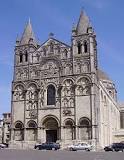
Cathédrale d'Angoulème (Image Wikipédia)
La cathédrale Saint-Pierre
Angoulême , dans le département de la Charente a la particularité de posséder une cathédrale romane et non gothique comme tant d'autres villes en France.
La cathédrale Saint-Pierre est construite près du rempart de la ville, à l'initiative de Girard II, évêque d'Angoulême. Elle a été agrandie et transformée au cours des siècles, notamment par l'adjonction de nombreuses chapelles.
Sa principale transformation date du 19e siècle, entre 1852 et 1875. L'architecte Paul Abadie (fils), soutenu par l'évêque Cousson, restitue l'édifice dans son hypothétique état originel en supprimant les chapelles. Le clocher est entièrement repris et l'intérieur de l'édifice est également restauré. La façade, très sculptée, constitue la pièce maîtresse de l'édifice. Elle est particulièrement spectaculaire et intéressante. Le décor de statues et de bas reliefs est très riche. Il date du 12° siècle. Trois thèmes principaux sont présentés sur la façade : l'Ascension du Christ, son retour à la fin des temps lors du jugement dernier et la Pentecôte. A droite du portail, se trouve une scène de chasse et une frise sculptée représentant un combat de cavaliers inspiré de la Chanson de Roland
Source : divers documents internet dont Wikipédia
The Saint-Pierre
Angoulême, in the department of Charente has the particularity of having a Romanesque cathedral and not gothic like so many other cities in France.
The Saint-Pierre cathedral is built near the rampart of the city, at the initiative of Girard II, bishop of Angoulême. It was enlarged and transformed over the centuries, including by adding many chapels.
Its main transformation dates from the 19th century, between 1852 and 1875. The architect Paul Abadie (son), supported by Bishop Cousson, restores the building in its hypothetical original state by removing the chapels. The bell tower is completely restored and the interior of the building is also restored. The façade, which is very sculpted, is the centerpiece of the building. It is particularly spectacular and interesting. The decoration of statues and bas-reliefs is very rich. It dates from the 12th century. Three main themes are presented on the façade: the Ascension of Christ, his return to the end times at the final judgment and Pentecost. To the right of the portal, is a hunting scene and a carved frieze representing a fight of horsemen inspired by the Song of Roland
Source : various Internet documents including Wikipedia