Informations sur le sujet du timbre 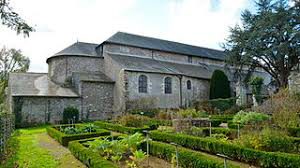
Abbatiale Saint Philbert-de-Grand-Lieu (Image Wikipédia)
L'abbaye Saint-Philibert de Saint-Philbert-de-Grand-Lieu
est une abbaye fondée au IXe siècle par des moines bénédictins et située à Saint-Philbert-de-Grand-Lieu en France. Il ne subsiste que l’église abbatiale et quelques bâtiments autour. C’est un édifice de style carolingien, qui a accueilli un temps le corps de saint Philibert dont la commune tirera son nom. À la suite de l’attaque du site par les Normands, les moines s’enfuient avec le corps du saint et se réfugient à Tournus. La communauté se reforme alors pour fonder un prieuré.
Utilisée au XIXe siècle comme marché couvert, l’abbatiale ne sert alors plus à la célébration du culte. Des fouilles mettent au jour le sarcophage du saint et l’édifice est classé au titre des monuments historiques en 18961. L’abbatiale est réaffectée au culte depuis 1936. C’est aujourd’hui l’un des monuments importants du pays de Retz ouvert aux visiteurs. Jouxtant l'abbatiale, le jardin des simples, regroupe de façon pédagogique des plantes médicinales
Source : divers documents internet dont Wikipédia
The Abbey of Saint-Philibert de Saint-Philbert-de-Grand-Lieu
is an abbey founded in the 9th century by Benedictine monks and located at Saint-Philbert-de-Grand-Lieu in France. Only the abbey church and some buildings remain around it. It is a building of Carolingian style, which has hosted the body of saint Philibert from which the commune will get its name. Following the attack on the site by the Normans, the monks fled with the saint’s body and took refuge in Tournus. The community then reforms to found a priory.
Used in the 19th century as a covered market, the abbey is no longer used for worship. Excavations reveal the sarcophagus of the saint and the building is classified as a historic monument in 18961. The abbey has been dedicated to worship since 1936. Today it is one of the most important monuments in the country of Retz open to visitors. Adjacent to the abbey, the garden of simple, includes in a pedagogical way medicinal plants
Source : various Internet documents including Wikipedia