Informations sur le sujet du timbre 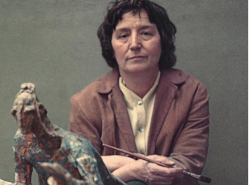
Germaine Richier (Image Wikipédia)
Germaine Richier étudie la sculpture à partir de 1920 à l’École des beaux-arts de Montpellier, dans l’atelier de Louis-Jacques Guigues, un ancien praticien de Rodin puis, à partir de 1926, elle travaille dans celui d’Antoine Bourdelle à Paris, jusqu’à la mort de ce dernier. En 1929, elle épouse Otto Bänninger, sculpteur suisse et praticien du maître. De 1930 à 1933, elle réalise huit nus et 26 bustes. Elle acquiert très vite une notoriété. En 1935, de retour d’un voyage à Pompéi, elle est très marquée par les êtres pétrifiés. L’année suivante, la galerie Kaganovitch lui consacre sa première exposition. Elle reçoit plusieurs prix, dont la médaille d’honneur pour Méditerranée à l’Exposition universelle de 1937 à Paris, et participe aussi à l’Exposition internationale de New York en 1939.
Source : divers documents internet dont Wikipédia
Germaine Richier studied sculpture from 1920 at the École des beaux-arts in Montpellier, in the studio of Louis-Jacques Guigues, a former practitioner of Rodin then, from 1926, she worked in that of Antoine Bourdelle in Paris, until his death. In 1929, she married Otto Bänninger, a Swiss sculptor and practitioner of the master. From 1930 to 1933, she made eight nudes and 26 busts. She quickly acquired a reputation. In 1935, returning from a trip to Pompeii, she was very marked by petrified beings. The following year, the Kaganovitch gallery dedicated its first exhibition to him. She received several awards, including the medal of honour for Méditerranée at the 1937 Universal Exhibition in Paris, and also participated in the 1939 New York International Exposition.
Source : various Internet documents including Wikipedia