Informations sur le sujet du timbre 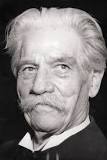
Albert Schweitzer (Image Wikipédia)
Albert Schweitzer
né le 14 janvier 1875 à Kaysersberg et mort le 4 septembre 1965 à Lambaréné, est un théologien protestant, musicien organiste, philosophe et médecin alsacien. Le Docteur Schweitzer est surtout connu pour son hôpital fondé en 1913 à Lambaréné au Gabon . Cela lui a valu de recevoir le pris Goethe en 1928 et celui du Prix Nobel de la Paix en 1952.
Mr Schweitzer passa son enfance à Gunsbach. Jeune enfant, à neuf ans il se mit à l'orgue. Puis en 1893, il obtient son baccalauréat. Le Jour de la Pentecôte 1896, il prit la décision qu'à l'âge de trente ans, il se consacrerait à un service humanitaire. Il passa ses doctorats de philosophie en 1899 et de théologie en 1900. Puis il devient pasteur de l'Eglise Saint-Nicolas de Strasbourg.
En automne 1904, il lut un article dans le «Journal des Missions Evangéliques de Paris» et décida de devenir médecin et d'aller à Lambaréné. En 1905, il débuta ses études de médecine à Strasbourg. En 1912, il suivit l'enseignement de médecine topicale à Paris. Promu Docteur en médecine en 1913, il partit pour Lambaréné en mars, en compagnie d'Hélène Bresslau qu'il avait épousée en 1912.
Schweitzer resta en Europe jusqu'en 1924 puis retourna en Afrique où il reconstruisit et aménagea son hôpital de Lambaréné pour y recevoir des milliers de patients africains.
Le Docteur Albert Schweitzer meurt à Lambaréné en 1965.
Source : divers documents internet dont Wikipédia
Albert Schweitzer
born 14 January 1875 in Kaysersberg and died 4 September 1965 in Lambaréné, is an Alsatian Protestant theologian, organ musician, philosopher and physician. Dr Schweitzer is best known for his hospital founded in 1913 in Lambaréné, Gabon. This earned him the Goethe prize in 1928 and the Nobel Peace Prize in 1952.
Mr Schweitzer spent his childhood in Gunsbach. As a young child, at the age of nine he started to play the organ. Then in 1893 he obtained his baccalaureate. On Pentecost 1896, he decided that at the age of thirty he would devote himself to a humanitarian service. He obtained his doctorate in philosophy in 1899 and in theology in 1900. Then he became pastor of the Saint-Nicolas church in Strasbourg.
In autumn 1904, he read an article in the «Journal des Missions Évangéliques de Paris» and decided to become a doctor and go to Lambaréné. In 1905, he began his medical studies in Strasbourg. In 1912, he studied topical medicine in Paris. Promoted to doctor in medicine in 1913, he left for Lambaréné in March, accompanied by Hélène Bresslau whom he had married in 1912.
Schweitzer remained in Europe until 1924, before returning to Africa where he rebuilt and converted his hospital in Lambaréné to receive thousands of African patients.
Dr Albert Schweitzer died in Lambaréné in 1965.
Source : various Internet documents including Wikipedia