Informations sur le sujet du timbre 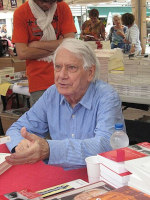
Jorge Semprún à la Comédie du Livre de Montpellier, le 23 mai 2009. (Image Wikipédia)
Jorge Semprún Maura
né le 10 décembre 1923 à Madrid (Espagne) et mort le 7 juin 2011 à Paris, est un écrivain, scénariste et homme politique espagnol dont l’essentiel de l’œuvre littéraire est rédigé en français. Il a été ministre de la Culture en Espagne de 1988 à 1991 dans le gouvernement socialiste de Felipe González.
Semprún est issu d’une famille de la grande bourgeoisie espagnole. Son père, José María Semprún Gurrea, était un catholique et républicain, avocat et professeur de droit. Pendant la Guerre civile espagnole, il a été diplomate au service de la République espagnole à La Haye. En 1939, après la défaite des Républicains, ses parents se sont établis définitivement en France. Pendant la Seconde Guerre mondiale, Semprún a rejoint la Résistance et est entré au Parti communiste d’Espagne (PCE) en 1942. Il intègre un réseau clandestin qui réceptionne les parachutages d’armes et les répartit dans les maquis de l’Yonne et de la Côte-d’Or. Arrêté par la Gestapo, il est déporté à Buchenwald. Peu avant l’arrivée des troupes américaines, il participe au soulèvement du camp. Il est libéré en avril 1945
Il a écrit plusieurs œuvres notables, dont Le Grand Voyage, La Deuxième Mort de Ramón Mercader, Quel beau dimanche!, L’Algarabie, L’Écriture ou la Vie, Adieu, vive clarté et Le mort qu’il faut.
Source : divers documents internet dont Wikipédia
Jorge Semprún Maura
, born 10 December 1923 in Madrid (Spain) and died 7 June 2011 in Paris, is a Spanish writer, screenwriter and politician whose literary work is mainly written in French. He was the Minister of Culture in Spain from 1988 to 1991 in the socialist government of Felipe González.
Semprún comes from a family of the Spanish bourgeoisie. His father, José María Semprún Gurrea, was a Catholic and Republican lawyer and law professor. During the Spanish Civil War, he was a diplomat in the service of the Spanish Republic in The Hague. In 1939, after the defeat of the Republicans, his parents settled permanently in France. During the Second World War, Semprún joined the Resistance and joined the Communist Party of Spain (PCE) in 1942. He integrates a clandestine network that receives the parachutages of weapons and distributes them in the maquis of the Yonne and the Côte-d'Or. Arrested by the Gestapo, he was deported to Buchenwald. Shortly before the arrival of American troops, he took part in the uprising in the camp. He is released in April 1945
He wrote several notable works, including The Great Journey, The Second Death of Ramón Mercader, What a Beautiful Sunday! , The Algarabie, Scripture or Life, Farewell, vivid clarity and Death that is needed.
Source : various Internet documents including Wikipedia