Informations sur le sujet du timbre 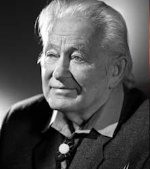
Georges Charpak (1924-2010) (Image Wikipédia)
Georges Charpak
né le 1er août 1924 dans le village de D?browica en Pologne (aujourd'hui Doubrovytsia en Ukraine), est un physicien français, lauréat du prix Nobel de physique 1992.
Sa famille émigre en France alors qu'il a sept ans. Durant la Seconde Guerre mondiale, dès 1941, il entre dans la Résistance. En 1943 il est arrêté et interné au centre de détention d'Eysses avant d'être déporté au camp de concentration de Dachau en Allemagne il y reste pendant un an, sa pratique de plusieurs langues contribuant selon lui à sa survie. Il devient citoyen français en 1946.
En 1948 il est admis au CNRS comme chercheur dans le laboratoire de physique nucléaire du Collège de France, dirigé par Frédéric Joliot-Curie et il obtient son doctorat ès sciences en 1955. Maître de recherche au CNRS en 1959, il rejoint le CERN à Genève où il est resté comme physicien permanent de 1963 à 1989. C'est dans ce dernier laboratoire qu'il met au point la chambre proportionnelle multifils, un détecteur de particules qui lui vaut le prix Nobel de physique en 1992 et qui remplace rapidement les chambres à bulles en permettant un traitement informatique des données.
Source : divers documents internet dont Wikipédia
Georges Charpak
, born 1 August 1924 in the village of D?browica in Poland (now Doubrovytsia in Ukraine), is a French physicist who was awarded the 1992 Nobel Prize for Physics.
His family emigrated to France when he was seven. During the Second World War, in 1941, he joined the Resistance. In 1943 he was arrested and interned at the Eysses detention centre before being deported to the Dachau concentration camp in Germany where he remained for a year, his practice of several languages contributing according to him to his survival. He became a French citizen in 1946.
In 1948 he was admitted to the CNRS as a researcher in the laboratory of nuclear physics at the Collège de France, directed by Frédéric Joliot-Curie and he obtained his doctorate in sciences in 1955. Research assistant at the CNRS in 1959, he joined CERN in Geneva where he remained as a permanent physicist from 1963 to 1989. In the latter laboratory he developed the multiwire proportional chamber, a particle detector which won him the Nobel prize for physics in 1992 and which quickly replaced bubble chambers by allowing computer processing of data.
Source : various Internet documents including Wikipedia